
Compassionate Care in Glaucoma Management As a primary care optometrist, I recognize that some patients may only come for a single visit. A young patient may get glasses or contact lenses and then leave when they go off to college, never to return. However, there are other patients who have remained in my practice for many years, and it’s my responsibility to ensure their ocular health is continuously managed, with proper diagnoses and treatment when necessary.
When I first diagnose glaucoma in a patient, it marks the beginning of an ongoing educational journey. While I discuss glaucoma regularly, for many patients, it’s the first time they’re learning about the condition. Their initial reaction is often, “Am I g oing blind?” In these moments, I stay calm and offer reassurance.
I explain that we’ll perform more tests to understand the severity of the disease, and I tell them, “Your level of concern should match mine. If I’m worried, I’ll tell you, and we’ll address it together.” My goal is for them to feel confident that I’ll guide them through the necessary treatment, adjust their medications as needed, and help them with next steps if the condition progresses. It’s also crucial for patients to understand the seriousness of glaucoma, a condition that often has no noticeable symptoms in the early stages.
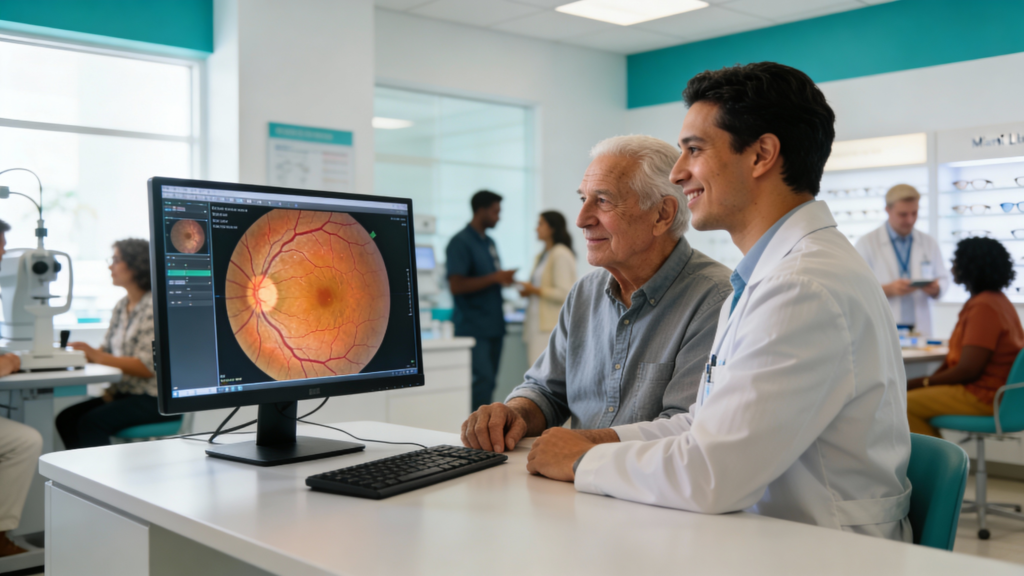
I stress the importance of adhering to treatment to prevent it from advancing. I make sure to show them their t est results, comparing their intraocular pressure (IOP), visual field, and optic nerve images to those of a healthy eye and eyes with more advanced glaucoma. I remind them that although glaucoma typically progresses slowly, any changes that occur are irrev ersible.
For patients to fully grasp their condition, I focus on consistency in my communication. During every visit, I review their current IOP, our target IOP, and compare the results from past and current tests. We also talk about how they’re feeling, whether th ey’re keeping up with their eye drops, and if they’re missing any doses.