
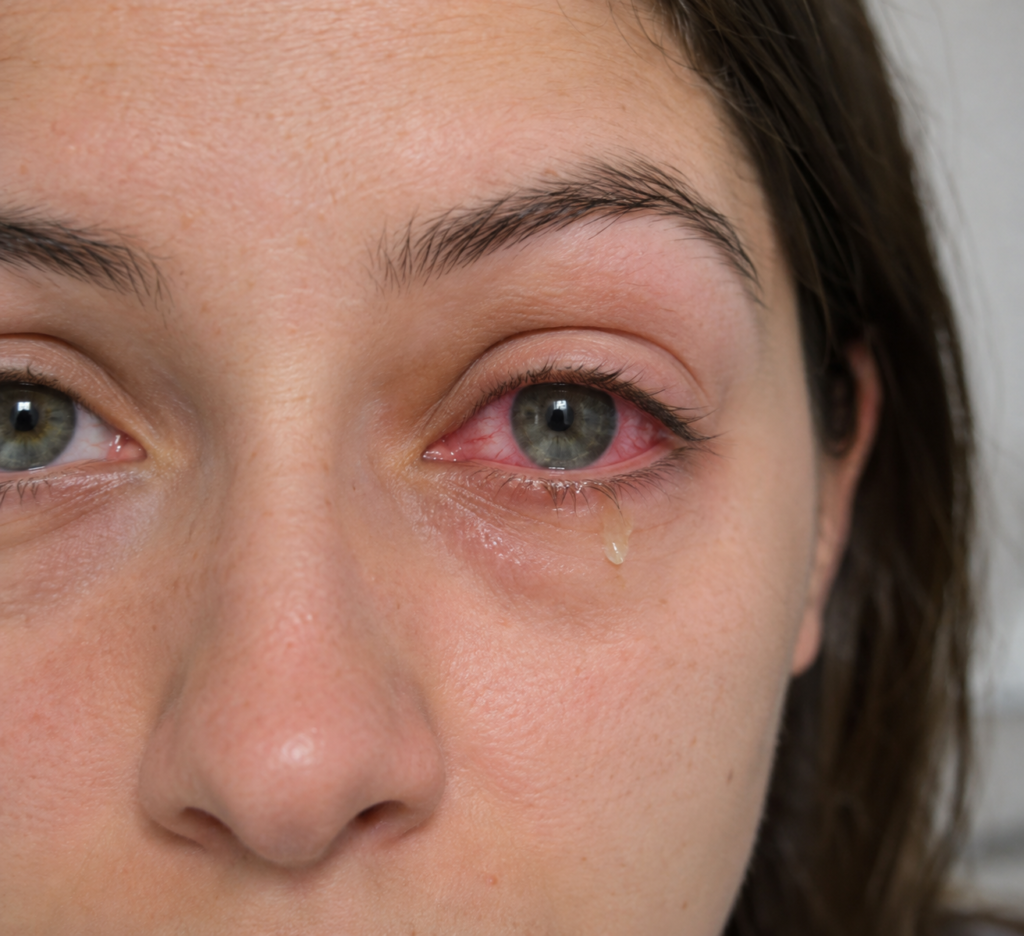
Conjunctivitis, often called pink eye, is one of the most common reasons people wake up with red, irritated eyes. Although it’s usually mild, the cause can vary, and the right treatment depends on identifying the correct type. Here’s a simple breakdown to help you understand the most common forms.
Viral Conjunctivitis
- What it feels like: Watery eyes, burning, light sensitivity, and a gritty or “sandy” feeling.
- What causes it: Cold or flu viruses, or exposure to someone else with viral pink eye.
- Is it contagious? Very. It spreads easily at school, work, and home.
- Treatment: Usually clears on its own. Cool compresses and artificial tears help. Avoid touching your eye and wash hands often.
Bacterial Conjunctivitis
- What it feels like: Redness with thick yellow or green discharge, eyelids stuck together in the morning.
- What causes it: Bacteria on the skin, makeup, contaminated contact lenses, or touching the eyes with unclean hands.
- Is it contagious? Yes. It can spread via close contact.
- Treatment: Often requires antibiotic eye drops from your eye doctor. Symptoms typically improve within 24 to 48 hours once treated.
Allergic Conjunctivitis
- What it feels like: Itchy, watery, red eyes. Often affects both eyes at once.
- Common triggers: Pollen, dust mites, pet dander, mold, cosmetics, or seasonal allergies.
- Is it contagious? No.
- Treatment: Allergy eye drops, cool compresses, and avoiding triggers. For chronic cases, your optometrist may recommend prescription drops.
Irritant / Chemical Conjunctivitis
- What it feels like: Redness, burning, and tearing after exposure to smoke, chlorine, fumes, cleaning products, or chemical splashes.
- Is it dangerous? Mild irritations are usually temporary. Chemical burns are an emergency and need immediate care.
- Treatment: Rinse the eyes extremely well and seek professional care if symptoms persist.
Contact-Lens-Related Conjunctivitis
- What it feels like: Red and irritated eyes, often from over wear, sleeping in lenses, or poor lens hygiene.
- Common types: Tight-lens syndrome, CLARE (Contact Lens Acute Red Eye), inflammatory reactions from dirty or old lens.
- Treatment: Stop wearing lenses, use prescribed drops, and review lens hygiene with your optometrist.
When to See an Optometrist
Seek professional care if you experience:
- Moderate to severe redness
- Eye pain
- Blurry vision
- Light sensitivity
- Thick discharge
- Symptoms lasting more than 2 to 3 days
Your eye doctor can determine the exact cause and provide the right treatment to help you heal quickly and prevent complications.